dragon fruit diseases and treatments pdf
Dragon fruit cultivation, while promising, is vulnerable to various pathogens․ Understanding diseases, their management, and preventative strategies is vital for sustained productivity and profitability․
Overview of Dragon Fruit Cultivation
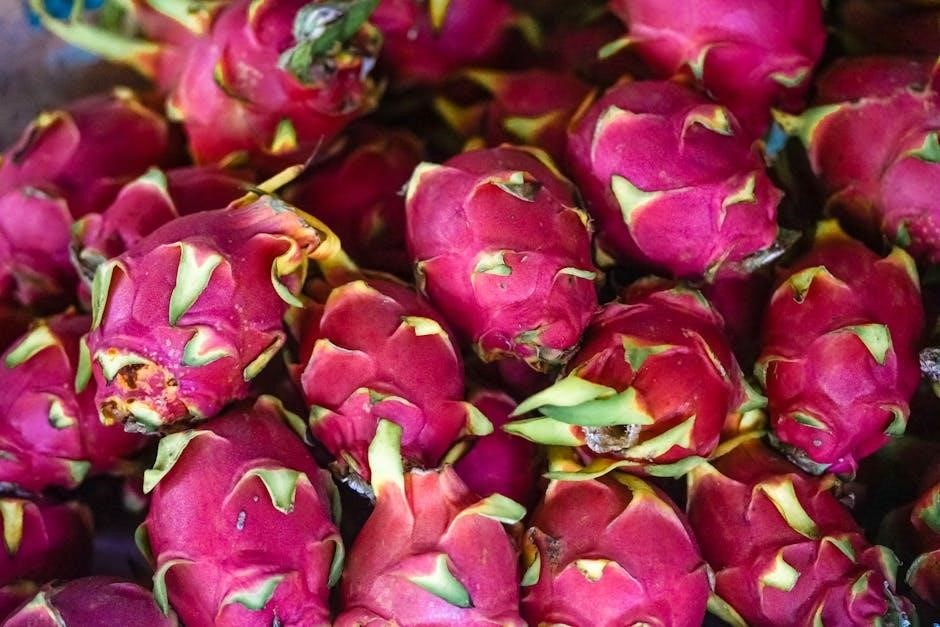
Dragon fruit (Hylocereus species) cultivation has expanded globally, prized for its unique appearance and nutritional value․ Typically grown in tropical and subtropical climates, these cacti require robust support systems due to their vining nature․ Successful farming relies on well-drained soil, ample sunlight, and careful irrigation practices․
Propagation commonly occurs via cuttings, ensuring genetic consistency․ However, intensive cultivation practices, like high planting densities, can inadvertently create microclimates conducive to disease development and pest infestations․ Therefore, proactive disease management is integral to maximizing yields and maintaining fruit quality․
Importance of Disease Management
Effective disease management is paramount in dragon fruit cultivation, directly impacting both yield quantity and fruit marketability․ Pathogens can cause significant economic losses through reduced harvests and diminished fruit quality, affecting grower profitability․ Early detection and swift intervention are crucial to prevent widespread outbreaks․
Proactive strategies, encompassing preventative measures and appropriate treatments, minimize disease pressure․ Ignoring disease symptoms can lead to rapid plant decline and substantial financial repercussions․ A comprehensive approach safeguards plant health and ensures sustainable production․
Common Fungal Diseases
Dragon fruit plants frequently encounter fungal infections like anthracnose and stem rot, posing significant threats to their health and overall productive capacity․
Anthracnose
Anthracnose represents a prevalent fungal disease impacting dragon fruit, causing substantial yield losses․ This infection manifests through characteristic lesions on fruits, stems, and even young cladodes․ These lesions initially appear as small, water-soaked spots, rapidly expanding and becoming sunken, often with a dark, concentric ring pattern․
Severe infections can lead to fruit cracking and rendering them unmarketable․ The fungus thrives in warm, humid conditions, and spreads via spores dispersed by rain, wind, and infected plant debris․ Effective management hinges on preventative measures and timely intervention to mitigate its impact on dragon fruit production․
Symptoms of Anthracnose
Initial symptoms of anthracnose on dragon fruit present as small, circular, and slightly sunken spots on the fruit surface․ These lesions quickly enlarge, developing a dark brown to black coloration, often exhibiting concentric rings – a key identifying feature․ Affected areas become water-soaked and may ooze a reddish-brown liquid․
Stem infections manifest as dark, elongated lesions, potentially girdling the stem and causing dieback․ Young cladodes can also display similar spotting․ Severe infections lead to fruit cracking, rendering them commercially unviable, and significantly reducing overall yield and quality․
Treatment and Prevention of Anthracnose
Managing anthracnose involves a multi-faceted approach․ Pruning infected stems and removing affected fruits promptly minimizes disease spread․ Fungicide applications, particularly protectant fungicides containing copper or mancozeb, are crucial, especially during wet weather․ Ensure thorough coverage of fruits and stems․
Preventative measures are paramount: improve air circulation through proper pruning, avoid overhead irrigation, and maintain good plant hygiene by removing debris․ Utilizing disease-free planting material and implementing crop rotation can also significantly reduce anthracnose incidence․
Fusarium Wilt
Fusarium wilt, a devastating soilborne fungal disease, poses a significant threat to dragon fruit production․ The fungus invades the vascular system, disrupting water and nutrient transport, leading to wilting, yellowing of leaves, and eventual plant death․ Symptoms often start on one side of the plant and progress rapidly․
Effective management relies heavily on preventative strategies, as treatment options are limited once infection occurs․ Utilizing resistant rootstocks, practicing crop rotation, and ensuring well-drained soil are crucial steps in minimizing risk․
Identifying Fusarium Wilt
Early detection of Fusarium wilt is challenging, as initial symptoms mimic nutrient deficiencies or water stress․ Look for subtle yellowing and wilting of leaves, often beginning on a single branch or side of the plant․ A key diagnostic sign is vascular discoloration – a brownish-red streaking within the stem when cut lengthwise․
Carefully excavate roots to check for similar discoloration․ Confirming the diagnosis requires laboratory testing to isolate and identify the Fusarium fungus from infected plant tissue․ Prompt identification is crucial for implementing control measures․
Management Strategies for Fusarium Wilt
Managing Fusarium wilt focuses on prevention, as eradication is difficult once established․ Utilize disease-free planting material and implement strict sanitation practices, including sterilizing pruning tools․ Soil solarization can reduce fungal populations․
Crop rotation with non-host plants is beneficial․ Grafting onto resistant rootstock offers a promising long-term solution, though availability may be limited․ Improve soil drainage and avoid overwatering to minimize stress on plants․ Chemical control with fungicides is generally ineffective․
Stem Rot
Stem rot in dragon fruit is a serious condition, often caused by fungal pathogens entering through wounds․ This disease weakens the plant structure, potentially leading to collapse and significant yield losses․ Identifying early symptoms is crucial for effective intervention and preventing widespread infection within the plantation․
Factors contributing to stem rot include poor ventilation, excessive moisture, and physical damage to the stem․ Maintaining optimal growing conditions and practicing preventative measures are key to minimizing risk․
Causes and Symptoms of Stem Rot
Stem rot primarily arises from fungal infections, often Phytophthora species, gaining entry through injuries caused by pruning, pests, or physical damage․ High humidity and poor air circulation exacerbate the problem, creating a favorable environment for fungal growth․ Initial symptoms include dark, water-soaked lesions on the stem․
As the disease progresses, these lesions expand, causing the stem to soften and decay․ A characteristic foul odor may develop․ Severely affected stems exhibit structural weakness, potentially leading to plant lodging and ultimately, death․
Treatment Options for Stem Rot
Effective treatment of stem rot necessitates a multi-pronged approach․ Pruning infected tissue is crucial, cutting well back into healthy wood and disinfecting tools between cuts to prevent spread․ Fungicides containing active ingredients like fosetyl-al or propamocarb can offer some control, applied preventatively or at early stages․
Improving air circulation through pruning and plant spacing is vital․ Ensuring good drainage prevents waterlogging, reducing fungal favorability․ In severe cases, removing and destroying the entire plant may be necessary to protect surrounding vegetation․

Bacterial Diseases
Dragon fruit plants are susceptible to bacterial infections, notably soft rot, potentially exacerbated by cross-contamination risks like citrus canker, impacting overall yield․
Bacterial Soft Rot
Bacterial soft rot, a destructive disease, affects dragon fruit, causing significant post-harvest losses and impacting plant vigor․ Symptoms initially manifest as water-soaked lesions, rapidly expanding into a mushy, foul-smelling decay․ Spread occurs through contaminated tools, infected plant debris, and even insect vectors․
Control measures prioritize sanitation – disinfecting pruning tools and removing infected tissues promptly․ Maintaining proper ventilation and avoiding physical damage to the fruit are also crucial preventative steps․ Copper-based bactericides may offer some protection, but early detection remains paramount for effective management․
Symptoms and Spread of Bacterial Soft Rot
Bacterial soft rot begins with small, water-soaked spots on the dragon fruit, quickly developing into a soft, slimy decay accompanied by a distinct, unpleasant odor․ This progresses rapidly, often affecting the entire fruit․ Initial infection frequently occurs through wounds created by insects or during harvesting․
The bacteria, Pectobacterium carotovorum, spreads via contaminated water, tools, and insect vectors like aphids․ It thrives in warm, humid conditions․ Infected plant debris serves as a primary source of inoculum, enabling the disease to persist and spread throughout the plantation․
Control Measures for Bacterial Soft Rot
Effective control of bacterial soft rot relies on preventative measures and swift action upon detection․ Sanitation is paramount; remove and destroy infected fruit and plant debris immediately․ Disinfect pruning tools and harvesting equipment regularly with a bleach solution or disinfectant․
Minimize wounding during harvest and handling․ Improve air circulation and drainage to reduce humidity․ Copper-based bactericides can offer some protection, but biological control agents are increasingly favored․ Implementing integrated pest management (IPM) to control insect vectors is also crucial․
Citrus Canker (Potential Cross-Contamination)
While primarily affecting citrus, Citrus canker presents a potential risk to dragon fruit farms located near citrus groves due to wind-blown transmission or shared equipment․ The bacterium Xanthomonas citri can survive on surfaces and potentially contaminate dragon fruit plants․
Strict biosecurity protocols are essential․ Avoid shared tools and equipment with citrus farms․ Regularly disinfect any equipment used in both orchards․ Monitor dragon fruit plants for any unusual lesions, and report suspected cases immediately to prevent widespread outbreaks and potential yield losses․
Understanding Citrus Canker Risk
The risk of Citrus canker impacting dragon fruit is relatively low, but not negligible, particularly in regions with co-cultivation․ Xanthomonas citri, the causative agent, thrives in humid conditions, creating a favorable environment for spread․ While dragon fruit isn’t a natural host, contamination via tools or wind dispersal is possible․
Understanding the bacterium’s survival capabilities on surfaces and its potential for long-distance spread is crucial․ Proactive monitoring and preventative measures are key to safeguarding dragon fruit crops from this potential cross-contamination threat, ensuring continued productivity․
Preventative Measures Against Citrus Canker
To mitigate Citrus canker risk in dragon fruit farms, strict sanitation protocols are essential․ Disinfect all pruning tools and equipment thoroughly between uses, especially after contact with citrus plants․ Implement buffer zones between dragon fruit and citrus orchards to minimize wind-borne bacterial spread․

Regularly inspect plants for any suspicious lesions and promptly remove and destroy any affected material․ Promoting good air circulation through proper pruning can also reduce humidity, hindering bacterial growth․ Vigilance and proactive measures are vital for protecting your crop․

Nematode Infestations
Dragon fruit plants are susceptible to nematode attacks, particularly root-knot nematodes, which significantly impact root health and overall plant vigor and yield․
Root-Knot Nematodes
Root-knot nematodes pose a substantial threat to dragon fruit production, causing significant damage to the root systems․ These microscopic roundworms invade the roots, leading to the formation of characteristic galls – abnormal swellings that disrupt nutrient and water uptake․ This disruption severely hinders plant growth, reduces fruit yield, and can ultimately lead to plant decline․
Infested plants often exhibit stunted growth, yellowing leaves, and reduced vigor․ The presence of these nematodes weakens the plant, making it more vulnerable to secondary infections from fungal and bacterial pathogens․ Effective management is crucial for maintaining healthy dragon fruit crops․
Impact of Root-Knot Nematodes on Dragon Fruit
Root-knot nematodes dramatically impact dragon fruit by interfering with essential physiological processes․ The galls they create obstruct water and nutrient transport, leading to nutrient deficiencies and hindering overall plant development․ This manifests as reduced shoot growth, smaller leaf size, and a noticeable decline in plant vigor․

Fruit production is significantly compromised, with lower yields and reduced fruit quality․ Heavily infested plants may exhibit premature fruit drop․ Long-term infestations can weaken the root system, increasing susceptibility to other stresses and diseases, ultimately shortening the plant’s productive lifespan․
Nematode Control Techniques
Effective nematode control requires an integrated approach․ Soil solarization, covering the soil with clear plastic during hot months, can raise temperatures lethal to nematodes․ Crop rotation with non-host plants, like marigolds, disrupts the nematode lifecycle․
Organic amendments, such as compost and manure, improve soil health and suppress nematode populations․ Biological control agents, beneficial fungi or bacteria, can parasitize nematodes․ Chemical nematicides offer quick relief but should be used cautiously due to environmental concerns and potential resistance development․

Insect Pests as Disease Vectors
Insect pests, like aphids and scale insects, can transmit dragon fruit pathogens, exacerbating disease spread and impacting overall plant health and yield․
Aphids and Disease Transmission
Aphids are notably small, soft-bodied insects frequently found clustering on the new growth of dragon fruit plants․ Beyond direct feeding damage, these pests act as significant vectors for various plant viruses, effectively spreading diseases throughout the plantation․ Their piercing-sucking feeding habits create entry points for pathogens, compromising plant defenses․
Controlling aphid populations is, therefore, crucial not only for preventing direct plant stress but also for mitigating the risk of secondary disease outbreaks․ Regular monitoring and implementing appropriate pest management strategies, including insecticidal soaps or biological controls, are essential for maintaining healthy dragon fruit crops․
Scale Insects and Disease Spread
Scale insects, another common pest affecting dragon fruit, pose a threat beyond their direct sap-feeding damage․ These immobile insects secrete honeydew, a sugary substance that encourages sooty mold growth, reducing photosynthetic capacity․ More critically, scale infestations weaken plants, making them more susceptible to fungal and bacterial diseases․
The protective waxy coating of scale insects shields them from many treatments, requiring specific control measures․ Furthermore, wounds created during scale feeding can serve as entry points for pathogens․ Effective management involves horticultural oils, systemic insecticides, or biological control agents to minimize disease risk․

Temperature Management and Post-Harvest Treatments
Maintaining optimal temperatures—around 6°C for 21-26 days—significantly reduces storage rots in dragon fruit caused by fungal pathogens post-harvest․
Hot Water Treatment for Storage Rots
Post-harvest, dragon fruit is susceptible to storage rots, primarily caused by fungal pathogens․ Implementing hot water treatments offers a viable, chemical-free solution to mitigate these issues․ This involves immersing the fruit in water heated to a specific temperature—typically between 50-55°C—for a defined duration, usually around 20-30 minutes․
The heat effectively eliminates surface-borne fungal spores, reducing the incidence of decay during storage․ Careful temperature control is crucial; excessively high temperatures can damage the fruit, while insufficient heat may prove ineffective․ This treatment, combined with proper storage conditions, extends shelf life and minimizes economic losses․
Optimal Storage Temperatures
Maintaining appropriate storage temperatures is paramount for preserving dragon fruit quality and minimizing post-harvest losses due to diseases․ Research indicates that storing dragon fruit at a consistently cool temperature of 6°C (43°F) significantly reduces the development of storage rots caused by fungal pathogens․
This temperature range, maintained for a period of 21 to 26 days, effectively inhibits fungal growth without compromising the fruit’s sensory attributes․ Fluctuations in temperature should be avoided, as they can accelerate ripening and increase susceptibility to decay․ Proper temperature control is a cornerstone of successful dragon fruit storage․

Preventative Measures and Best Practices
Prioritizing plant hygiene, ensuring proper ventilation and drainage, and removing decaying matter are crucial steps in preventing dragon fruit disease outbreaks․
Importance of Plant Hygiene
Maintaining impeccable plant hygiene is paramount in dragon fruit cultivation, serving as a foundational preventative measure against numerous diseases․ Regularly removing fallen leaves, decaying fruit, and any other organic debris eliminates potential breeding grounds for fungal spores and bacterial pathogens․
Sanitizing pruning tools with a disinfectant solution between cuts prevents the spread of infectious agents from infected to healthy tissues․ Thoroughly cleaning structures like trellises and stakes also minimizes pathogen reservoirs․ Consistent monitoring for early signs of disease allows for prompt removal of affected plant parts, limiting further contamination and protecting the overall health of the plantation․
Proper Ventilation and Drainage
Optimal air circulation and effective drainage are crucial for mitigating disease risks in dragon fruit cultivation․ Good ventilation reduces humidity within the canopy, discouraging the development of fungal pathogens like anthracnose and stem rot․
Well-drained soil prevents root rot and fosters a healthier root system, enhancing the plant’s natural defenses․ Implementing proper spacing between plants and pruning to open the canopy promotes airflow․ Ensuring adequate drainage through soil amendments or raised beds is essential, particularly in regions with heavy rainfall, safeguarding against waterlogged conditions․