
quantum theory for dummies pdf
Quantum Theory for Dummies PDF: A Comprehensive Plan
This plan details creating a PDF simplifying quantum theory, leveraging tools like Python Tutor for visualization and AI assistance,
making complex concepts accessible to beginners.
Quantum theory, a cornerstone of modern physics, often appears daunting to newcomers. This introduction aims to demystify its core principles, offering a gentle entry point for those without a strong physics background. We’ll explore how resources like “Quantum Theory for Dummies” PDFs, coupled with interactive tools such as Python Tutor, can significantly enhance understanding.
These PDFs frequently utilize visualizations to explain abstract concepts, and the Python Tutor allows step-by-step code execution, aiding comprehension of quantum algorithms and simulations. This approach bridges the gap between theoretical knowledge and practical application.
What is a “Quantum Theory for Dummies” PDF?
A “Quantum Theory for Dummies” PDF is a resource designed to explain the intricacies of quantum mechanics in a simplified, accessible manner. These documents typically break down complex ideas – like superposition and entanglement – into digestible segments, avoiding heavy mathematical formalism initially.
They often incorporate visual aids and analogies, and may include exercises or examples to reinforce learning. Crucially, they aim to provide a foundational understanding before delving into more advanced topics, often referencing tools like Python Tutor for interactive exploration.
Target Audience and Scope
The primary target audience for a “Quantum Theory for Dummies” PDF is individuals with little to no prior knowledge of physics or advanced mathematics. This includes high school students, undergraduates in non-physics majors, and curious lifelong learners.
The scope generally focuses on conceptual understanding, prioritizing intuition over rigorous mathematical derivations. It will cover core principles – quantization, wave-particle duality, uncertainty – and potentially touch upon applications like quantum computing, while avoiding overly specialized or technical details.
Common Features of Such PDFs
Typically, these PDFs emphasize clear, jargon-free explanations, often employing analogies and visual aids to illustrate abstract concepts. Expect a step-by-step approach, building understanding from foundational principles. Interactive elements, like quizzes or exercises, are common.
Many incorporate code examples (Python, Java, C) utilizing tools like Python Tutor for visualizing algorithms and debugging. AI-powered tutoring and online compilers are frequently linked as supplementary resources, enhancing the learning experience.
Core Concepts Explained Simply
These PDFs break down complex ideas like quantization of energy, wave-particle duality, and the Heisenberg Uncertainty Principle into digestible segments. Visualizations are key, using diagrams and animations to demonstrate superposition and entanglement. Mathematical equations are minimized, focusing on conceptual understanding rather than rigorous calculations.
Practical examples, like lasers and MRI technology, illustrate real-world applications. AI tutoring assists with grasping these concepts, offering personalized explanations and debugging support.
Quantization of Energy
Quantum theory posits that energy isn’t continuous, but exists in discrete packets called quanta. PDFs explain this using analogies, like stairs versus a ramp – energy levels are stepped, not smooth. Max Planck’s work is highlighted, showing how this concept resolved the blackbody radiation problem.
Visualizations demonstrate how electrons can only occupy specific energy levels within an atom, explaining atomic spectra and the emission of light at specific frequencies.
Wave-Particle Duality
A core concept, wave-particle duality, states that quantum entities exhibit both wave-like and particle-like properties. PDFs illustrate this with the double-slit experiment, showing interference patterns even with single particles. Einstein’s photoelectric effect demonstrates light’s particle nature (photons).
Explanations avoid complex math, focusing on the probabilistic nature of quantum mechanics and how observation influences behavior. Visual aids are crucial for grasping this counterintuitive idea.
The Heisenberg Uncertainty Principle
This principle, central to quantum mechanics, states we can’t know both a particle’s position and momentum with perfect accuracy. PDFs explain this isn’t a measurement limitation, but a fundamental property of the universe. Visualizations demonstrate how measuring one property inherently disturbs the other.
Analogies help grasp the concept – like trying to pinpoint a wave’s exact location. The PDF avoids mathematical formulas, focusing on the implications for predictability.
Key Figures in Quantum Theory
A “Quantum Theory for Dummies” PDF dedicates a section to the pioneers who shaped this field. It profiles Max Planck, whose quantization of energy sparked the revolution, and Albert Einstein, explaining the photoelectric effect. The PDF highlights Niels Bohr’s atomic model and the contributions of Werner Heisenberg and Erwin Schrödinger.

Biographical sketches are kept concise and focus on their key discoveries, avoiding complex jargon. Images and timelines enhance understanding of their interconnected work.
Max Planck and the Birth of Quantum Mechanics
A “Quantum Theory for Dummies” PDF explains Max Planck’s revolutionary idea: energy isn’t continuous, but comes in discrete packets called “quanta.” The PDF simplifies his 1900 solution to the blackbody radiation problem, a major physics puzzle. It avoids complex equations, focusing on the concept of energy levels.
Visual aids illustrate how Planck’s constant (h) defines the size of these energy packets. The section emphasizes this was the birth of quantum mechanics.
Albert Einstein and the Photoelectric Effect
A “Quantum Theory for Dummies” PDF clarifies Einstein’s 1905 explanation of the photoelectric effect – how light can eject electrons from a metal. The PDF explains light isn’t just a wave, but also behaves as particles (photons), each with a specific energy.
It simplifies the concept of work function and threshold frequency, using diagrams to show how photon energy determines electron emission. The section highlights this solidified the quantum idea.
Niels Bohr and the Atomic Model
A “Quantum Theory for Dummies” PDF would explain Bohr’s 1913 model, a pivotal step in understanding atomic structure. The PDF details how Bohr proposed electrons orbit the nucleus at specific energy levels, unlike classical physics.
It simplifies the idea of quantized energy levels and electron jumps between them, emitting or absorbing photons. The section would use visuals to illustrate these orbits and transitions, making the concept accessible to beginners.
Werner Heisenberg and Erwin Schrödinger
A “Quantum Theory for Dummies” PDF must cover these giants. The PDF explains Heisenberg’s Uncertainty Principle – you can’t know both position and momentum precisely. It simplifies Schrödinger’s wave equation, describing how quantum states evolve over time.
The section would contrast their approaches: Heisenberg’s matrix mechanics versus Schrödinger’s wave mechanics, showing they’re mathematically equivalent. Visual aids would illustrate wave functions and probability distributions, demystifying these complex ideas.
Understanding Quantum States and Superposition
A “Quantum Theory for Dummies” PDF needs a clear explanation of quantum states – the mathematical description of a quantum system. The PDF will define superposition: a particle existing in multiple states simultaneously until measured. It will use analogies, like a coin spinning in the air, to illustrate this concept.
Visualizations are key; the PDF could show wave function representations of superposed states. It will emphasize that measurement collapses the superposition into a single, definite state, a core quantum idea.
What is a Quantum State?
A “Quantum Theory for Dummies” PDF must define a quantum state as the complete description of a physical system. The PDF will explain it’s not about position or momentum alone, but a probability distribution. It will use the concept of a wave function, avoiding complex math initially, focusing on its role in predicting outcomes.
The PDF will illustrate how a quantum state evolves over time, governed by the Schrödinger equation (simplified explanation). It will emphasize that knowing the state allows predicting all measurable properties.
The Concept of Superposition
A “Quantum Theory for Dummies” PDF will explain superposition as a quantum system existing in multiple states simultaneously. The PDF will use the analogy of a coin spinning in the air – it’s neither heads nor tails until observed. It will clarify that measurement forces the system to “choose” one state.
The PDF will emphasize this isn’t simply uncertainty; it’s a fundamental property. It will illustrate with examples like Schrödinger’s cat, carefully explaining the thought experiment’s purpose.
Quantum Entanglement: Spooky Action at a Distance
A “Quantum Theory for Dummies” PDF will demystify entanglement, explaining how two particles become linked, sharing the same fate no matter the distance. The PDF will highlight Einstein’s “spooky action at a distance” critique, emphasizing that measuring one instantly influences the other.
It will clarify this isn’t faster-than-light communication, but a correlation. The PDF will use simple analogies, avoiding complex math, and showcase potential applications in quantum computing and cryptography.

Quantum Computing Basics
A “Quantum Theory for Dummies” PDF will introduce quantum computing, contrasting it with classical computing. The PDF will explain the fundamental unit – the qubit – and its ability to represent 0, 1, or both simultaneously, unlike classical bits.
It will cover superposition and entanglement’s role in quantum processing, highlighting potential speedups for specific problems. The PDF will also touch upon potential applications like drug discovery and materials science, keeping explanations accessible.
Qubits vs. Bits
A “Quantum Theory for Dummies” PDF will clearly differentiate qubits from classical bits. The PDF will explain that bits store information as 0 or 1, while qubits leverage superposition to exist as 0, 1, or a combination of both.
It will illustrate how this allows quantum computers to explore multiple possibilities concurrently, offering potential computational advantages. The PDF will use analogies to explain the concept without complex mathematical formalism, focusing on the core difference.
Potential Applications of Quantum Computing
A “Quantum Theory for Dummies” PDF will explore exciting applications, avoiding jargon. The PDF will detail how quantum computing could revolutionize drug discovery by simulating molecular interactions with unprecedented accuracy.
It will also cover advancements in materials science, financial modeling, and cryptography, explaining how quantum algorithms could break current encryption methods. The PDF will emphasize these are potential future impacts, not immediate realities.
Resources for Learning: Finding Reliable PDFs
A “Quantum Theory for Dummies” PDF guide will caution users about the abundance of misinformation online. The PDF will direct learners to reputable websites of universities and research institutions offering introductory materials.
It will emphasize verifying author credentials and publication dates. The PDF will warn against PDFs promising unrealistic results or lacking scientific backing, promoting critical evaluation of sources before accepting information as fact.
Reputable Websites and Institutions
The “Quantum Theory for Dummies” PDF will recommend MIT OpenCourseWare and Stanford Encyclopedia of Philosophy for foundational knowledge. It will also list the websites of CERN and the Perimeter Institute for Theoretical Physics, offering accessible articles and videos.

Furthermore, the PDF will suggest exploring university physics departments’ online resources, ensuring content is peer-reviewed and scientifically accurate. These institutions provide reliable learning materials, avoiding the pitfalls of unverified online sources.
Avoiding Misinformation and Scams

The “Quantum Theory for Dummies” PDF will caution users against websites promising “quantum secrets” or quick mastery. It will emphasize verifying author credentials and cross-referencing information with established scientific sources. Beware of PDFs requiring payment for basic concepts or promoting pseudoscientific claims.
The guide will advise prioritizing resources from universities and reputable institutions, recognizing that legitimate quantum physics education requires rigorous study and mathematical foundations.
Utilizing Visualizers for Quantum Concepts (Python Tutor)
The “Quantum Theory for Dummies” PDF will strongly recommend Python Tutor as a crucial learning aid. It will explain how this web-based tool visualizes code execution, making abstract quantum algorithms more concrete. Users can step through simulations in Python, Java, C, and JavaScript, observing variable changes.
The PDF will highlight Python Tutor’s debugging capabilities and integrated AI tutor, offering personalized assistance with complex concepts like superposition and entanglement.
Python Tutor for Visualizing Quantum Algorithms
The “Quantum Theory for Dummies” PDF will dedicate a section to utilizing Python Tutor for algorithm comprehension. It will demonstrate how visualizing code execution clarifies quantum processes, like qubit manipulation and measurement. The guide will showcase examples, stepping through simple quantum circuits.
The PDF will emphasize Python Tutor’s ability to illustrate data structures and recursion, vital for understanding quantum computation. It will also explain how to debug quantum-related code effectively using this tool.
Step-by-Step Debugging of Quantum Code
The “Quantum Theory for Dummies” PDF will feature a practical guide to debugging quantum code, utilizing online compilers and Python Tutor. It will explain how to trace execution flow, inspect variable states (qubits!), and identify errors in quantum algorithms. The PDF will focus on common pitfalls for beginners.
Readers will learn to systematically isolate issues, leveraging step-by-step visualization to understand code behavior. Emphasis will be placed on understanding error messages and applying debugging techniques effectively.
Online Compilers and Debuggers for Quantum-Related Languages
The “Quantum Theory for Dummies” PDF will curate a list of accessible online compilers and debuggers for languages used in quantum computing, like Python, C/C++, and Java. It will highlight platforms offering step-by-step visualization, crucial for grasping quantum concepts. The guide will detail how to utilize these tools for practical exercises.
Readers will find links and tutorials for each compiler, enabling hands-on coding and debugging. The focus will be on user-friendly interfaces and features supporting quantum algorithm development.
C/C++ Compilers for Quantum Simulations
The “Quantum Theory for Dummies” PDF will feature C/C++ compilers vital for simulating quantum systems. It will explain why these languages are preferred for performance-intensive quantum calculations. The guide will showcase online compilers offering visual debugging, aiding comprehension of pointer manipulation and memory management – key in quantum simulations.

Resources will include links to compilers with step-by-step visualization, helping beginners trace code execution. Emphasis will be placed on compilers supporting object-oriented programming for complex simulations.
Java Compilers for Quantum Programming Exercises
The “Quantum Theory for Dummies” PDF will incorporate Java compilers for practical quantum programming exercises. It will highlight Java’s role in learning object-oriented programming concepts crucial for understanding quantum algorithms. The guide will present online compilers with visual debuggers, enabling step-by-step code analysis.
Resources will include links to compilers offering AI tutoring, assisting with debugging and grasping complex concepts. Emphasis will be placed on compilers supporting visualization of data structures and recursion.
AI Tutoring Tools for Quantum Mechanics
The “Quantum Theory for Dummies” PDF will showcase AI tutoring tools to personalize the learning experience. These tools will offer assistance with understanding quantum concepts, providing tailored explanations and support. The PDF will detail platforms like Python Tutor, which integrates AI to help debug code and explain algorithms step-by-step.
Emphasis will be placed on AI’s ability to create personalized learning paths, adapting to individual student needs and progress. Resources will include links to platforms offering AI assistance for Java, C, and Python.
AI Assistance with Quantum Concepts
The “Quantum Theory for Dummies” PDF will highlight how AI can demystify complex quantum ideas. AI tutors, integrated within platforms like Python Tutor, offer step-by-step explanations and debugging assistance for related code in languages like Python, Java, and C++. This support is crucial for grasping abstract concepts.
The PDF will demonstrate how AI can personalize learning, identifying knowledge gaps and providing targeted exercises; It will showcase AI’s ability to visualize quantum algorithms, making them more intuitive.
Personalized Learning Paths
The “Quantum Theory for Dummies” PDF will emphasize tailored learning experiences. AI-driven assessments within platforms like Python Tutor can pinpoint a learner’s strengths and weaknesses in quantum mechanics. Based on this, the PDF will suggest customized sequences of topics and exercises.
This approach moves beyond a one-size-fits-all model, allowing individuals to focus on areas needing improvement. The PDF will link to relevant online compilers and debuggers for practical application.

Practical Applications of Quantum Theory (Simplified)
The “Quantum Theory for Dummies” PDF will bridge the gap between abstract concepts and real-world technology. It will explain how quantum principles underpin lasers, essential in modern devices like barcode scanners and fiber optic communication. Furthermore, the PDF will demystify Magnetic Resonance Imaging (MRI),
highlighting its reliance on quantum phenomena for detailed medical imaging. These examples demonstrate quantum theory isn’t just theoretical, but fundamentally shapes our daily lives.
Lasers and Modern Technology
The “Quantum Theory for Dummies” PDF will dedicate a section to lasers, explaining their operation through stimulated emission – a core quantum process. It will detail how lasers, born from quantum mechanics, are integral to barcode scanners, DVD players, and high-speed internet via fiber optics.
The PDF will illustrate how understanding quantized energy levels is crucial to laser functionality, making this complex technology accessible to a broader audience.
Medical Imaging (MRI)
The “Quantum Theory for Dummies” PDF will explain Magnetic Resonance Imaging (MRI) as a practical application of quantum spin. It will detail how MRI utilizes the quantum property of nuclear spin to create detailed images of the human body’s internal structures.
The PDF will simplify the concepts of nuclear magnetic resonance and radiofrequency pulses, demonstrating how quantum phenomena are vital for modern medical diagnostics.
Common Misconceptions About Quantum Theory
The “Quantum Theory for Dummies” PDF will directly address frequent misunderstandings. It will debunk the idea that quantum mechanics implies consciousness causes reality, clarifying that observation measures a state, not creates it.

The PDF will also correct the notion of quantum teleportation being like “Star Trek,” explaining it’s information transfer, not matter. It will emphasize that quantum effects aren’t just for the very small.
The Role of Mathematics in Quantum Theory (Basic Overview)
The “Quantum Theory for Dummies” PDF will acknowledge math’s crucial role, but minimize complex equations initially. It will explain that quantum states are described by mathematical functions (wavefunctions), without diving into differential equations.
The PDF will illustrate how probability is central, using basic algebra to show how wavefunctions relate to the likelihood of finding a particle in a specific state. It will emphasize conceptual understanding over rigorous calculation.
Further Exploration: Recommended Books and Courses
The “Quantum Theory for Dummies” PDF will suggest accessible next steps for continued learning. It will list popular science books explaining quantum concepts without heavy math, like those by Brian Greene or Carlo Rovelli. The PDF will also point to introductory online courses on platforms like Coursera and edX.
Recommendations will include resources geared towards self-study, emphasizing visual learning and conceptual understanding, building upon the PDF’s simplified foundation. Links to reputable university lectures will also be provided.
Quantum Theory and its Philosophical Implications
The “Quantum Theory for Dummies” PDF briefly touches upon the profound philosophical questions raised by quantum mechanics; It will explain how concepts like superposition and entanglement challenge classical notions of reality, determinism, and objectivity. The PDF will introduce the Many-Worlds Interpretation and other interpretations.
It will emphasize that quantum theory isn’t just about physics; it forces us to reconsider our fundamental understanding of existence, observation, and the nature of consciousness.
The Future of Quantum Technology
The “Quantum Theory for Dummies” PDF will briefly explore the exciting potential of emerging quantum technologies. It will cover quantum computing’s promise to revolutionize fields like medicine, materials science, and artificial intelligence. The PDF will also touch upon quantum cryptography and secure communication methods.
It will highlight the ongoing research and development, acknowledging the challenges while maintaining an optimistic outlook on the future impact of quantum innovations.
Troubleshooting Common Issues When Studying Quantum Theory
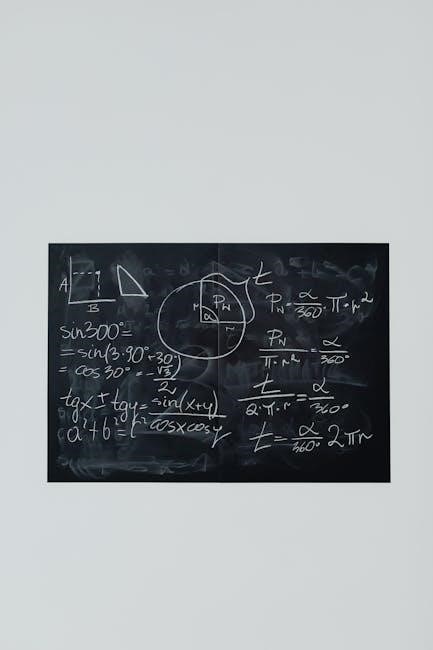
The “Quantum Theory for Dummies” PDF will dedicate a section to addressing typical hurdles learners face. It will offer strategies for overcoming mathematical difficulties, conceptual misunderstandings, and the inherent abstractness of the subject. The PDF will suggest utilizing visual tools like Python Tutor to debug code and reinforce understanding.
It will also provide guidance on finding reliable resources and avoiding misinformation prevalent online, fostering a confident learning experience.
Embracing the Quantum World
The “Quantum Theory for Dummies” PDF aims to demystify this fascinating field, empowering readers to explore its implications. It encourages continued learning through recommended books, courses, and online resources. The PDF highlights the transformative potential of quantum technology, from computing to medical imaging.
Ultimately, it fosters an appreciation for the quantum realm and its profound impact on our understanding of reality.